

Organize for access as well as protection
Important documents can help you reconnect with services, verify information, and manage recovery after a disruption. The aim is not to carry every original paper everywhere. Decide what you might need quickly, what should remain securely stored, and what can be copied. Begin with a manageable group rather than postponing the project until you can organize the entire household archive. The Federal Trade Commission provides a useful starting guide for arranging important papers before a disaster. Adapt that framework to the documents and responsibilities you actually have.
Make a short inventory
Consider identification information, essential contacts, insurance details, housing records, relevant health information, and pet records where applicable. Include account or provider contact details that help you obtain replacement documents through legitimate channels. Record where originals are stored rather than making unnecessary duplicate originals. Check dates and ownership so the inventory does not include outdated or unrelated records. You may not need the same information for a short evacuation as for a later insurance claim. Separate immediate access needs from the larger recovery file to keep the portable set manageable.
Protect paper against ordinary risks
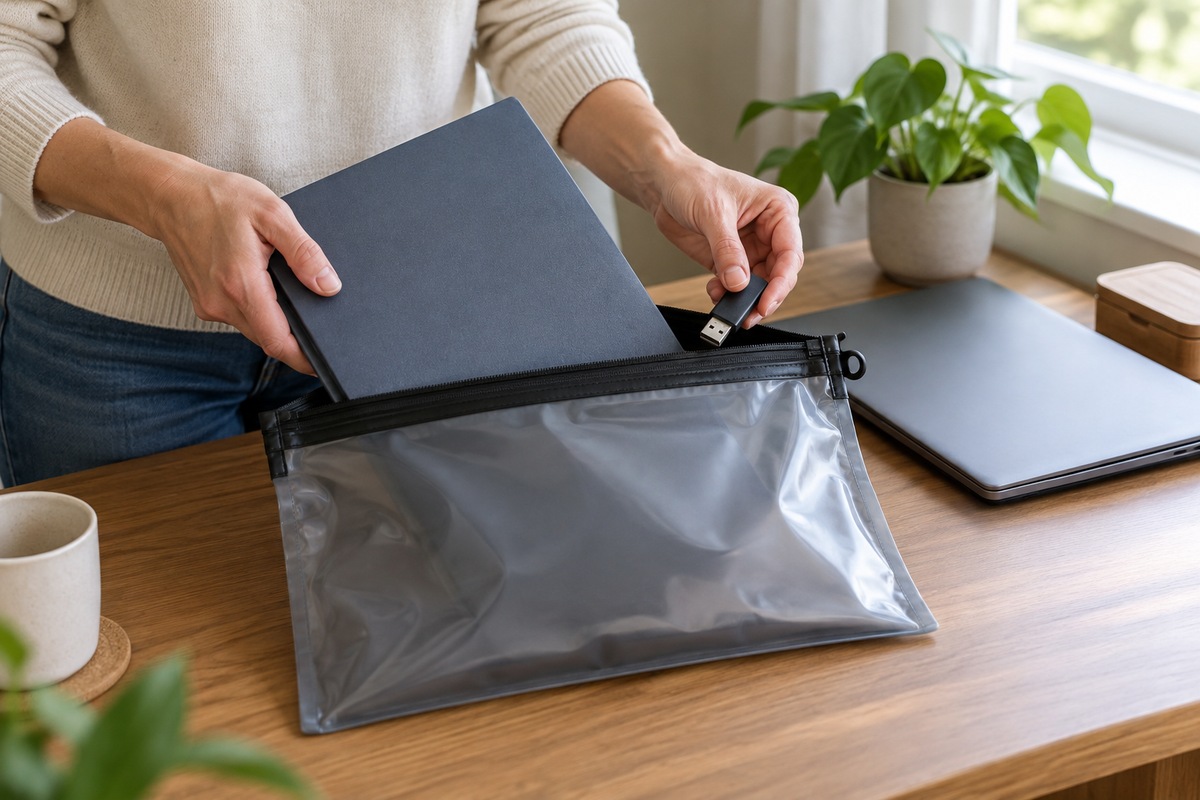
Choose suitable protective storage based on the risks you are trying to reduce, such as water exposure, fire, theft, or loss. Read a product’s actual rating rather than assuming that any pouch is waterproof or any box is fireproof. Keep portable copies somewhere reachable without blocking an exit. Store originals appropriately and tell an agreed trusted person how relevant documents can be accessed if necessary. Avoid putting the only copy in one vulnerable location. Never delay leaving an immediate danger to retrieve paperwork, even when replacement would be inconvenient.
Make digital copies thoughtfully
Clear digital copies can supplement paper records, but they introduce their own access and privacy questions. Use secure storage, strong account protection, and an appropriate backup. Consider what happens if your phone is lost, the internet is unavailable, or the authentication method depends on a device you cannot access. Do not store sensitive files on a public or shared computer without understanding the risks. A plain USB drive is not automatically secure. Choose a setup you understand and can maintain rather than collecting files in several places you may later forget.
Share only what is needed
Agree in advance who may need access and for what purpose. A caregiver may need essential health instructions, while a travel companion may need only a contact number. Avoid sending a complete identity and account archive through an ordinary group message. Keep passwords separate from exposed paper labels and be careful about photographs that reveal private information. During recovery, verify requests using known official contact channels before sending documents. Urgent-sounding messages do not prove that a request is legitimate, even when they refer to a real local emergency.
Review the file with routine household changes
Update copies when contact details, policies, prescriptions, housing, or household responsibilities change. Remove outdated versions securely so they do not confuse the person trying to help. Confirm that files open and that the intended users know the access process without revealing private contents during a casual demonstration. Set a simple review reminder and check again after a move. A small, current, protected collection is more useful than a large folder nobody can locate. The project is complete when the right information can be reached by the right people when needed.
Further reading: FTC: Organize Important Papers Before a Disaster; FEMA: Safeguard Critical Documents and Valuables; CISA: Account and Device Security.