
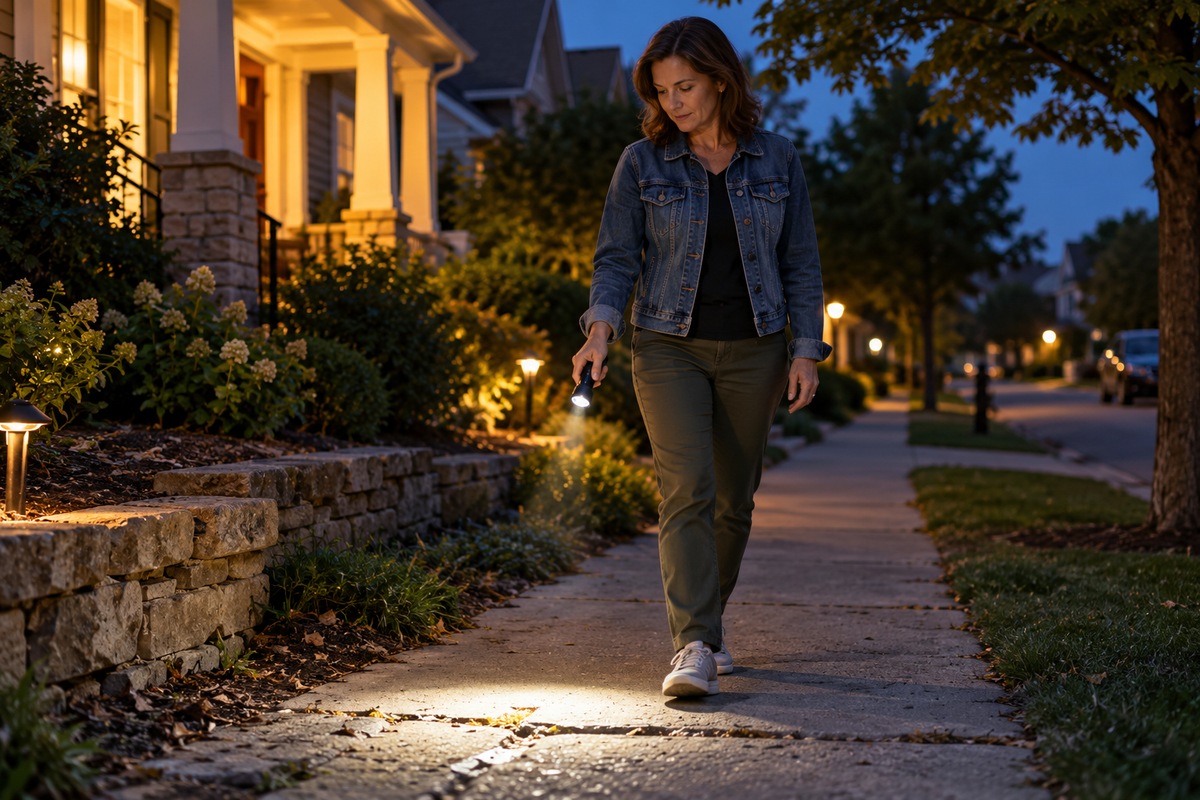

Choose for the places you walk
A flashlight can help you notice a broken step, locate a dropped key, or identify the edge of a poorly lit path. Choose it for those ordinary tasks first. A light that feels comfortable and is easy to operate may be more useful than one with impressive specifications and confusing controls. Think about your commute, the weather you encounter, and whether you normally carry a bag. The National Park Service includes independent illumination among its outdoor essentials, a useful reminder that your phone need not do every job.
Look beyond maximum brightness
Maximum output is only one part of a light’s usefulness. Consider beam shape, lower settings, runtime, grip, and the ease of changing modes. A broad beam may suit nearby walking tasks, while a narrow beam concentrates light farther away. High settings can consume available power faster and create distracting glare close up. Read how the manufacturer describes runtime and whether output changes during use. Compare the light in realistic conditions if the seller allows a demonstration or return. Avoid treating a brightness claim as proof of personal protection.
Try the controls before relying on them
Operate the switch with the hand you normally use, including any gloves you regularly wear. Check whether you can reach a practical steady-light setting without cycling through several modes. Consider how the light behaves when switched on again: does it remember a useful mode or start somewhere unexpected? A complicated interface can make a simple task frustrating. If flashing modes bother you or someone in your household, select equipment that makes a steady setting easy to access. Choose controls around your abilities rather than an imagined ideal user.
Plan for power and weather
Rechargeable and replaceable-battery models both require a maintenance plan. For a rechargeable light, confirm the cable and charging requirements and schedule checks. For a replaceable-battery model, use the specified battery type and follow the instructions for storage and replacement. Do not improvise incompatible cells or chargers. Check the stated water-resistance rating against the conditions you expect; water resistance is not an unlimited promise. Inspect the lens, seals, switch, and battery area for damage. Keep a backup light at home if losing your everyday one would create a problem.
Use light without creating new problems
Aim toward the area you need to see, not into people’s eyes or drivers’ faces. Avoid shining it at moving vehicles, through private windows, or across someone else’s path. When walking near traffic, follow pedestrian safety practices and use appropriate crossings rather than assuming the beam makes you visible. A flashlight should support moving toward a safer, better lit place. It should not encourage approaching a suspicious situation to investigate. If you need both hands for a routine task, consider whether a suitable headlamp would be more practical.
Build a simple check into your routine
Before an evening outing, confirm that the light works and place it somewhere reachable. Periodically practice finding and operating it without looking through your entire bag. Test it in familiar surroundings so you know what a normal beam and battery indication look like. Replace damaged parts through the manufacturer’s recommended process. Your goal is dependable illumination, not a device that promises to solve every safety concern. A modest light that you carry, understand, and maintain can support better decisions during ordinary moments of uncertainty.
Further reading: National Park Service: Ten Essentials.