
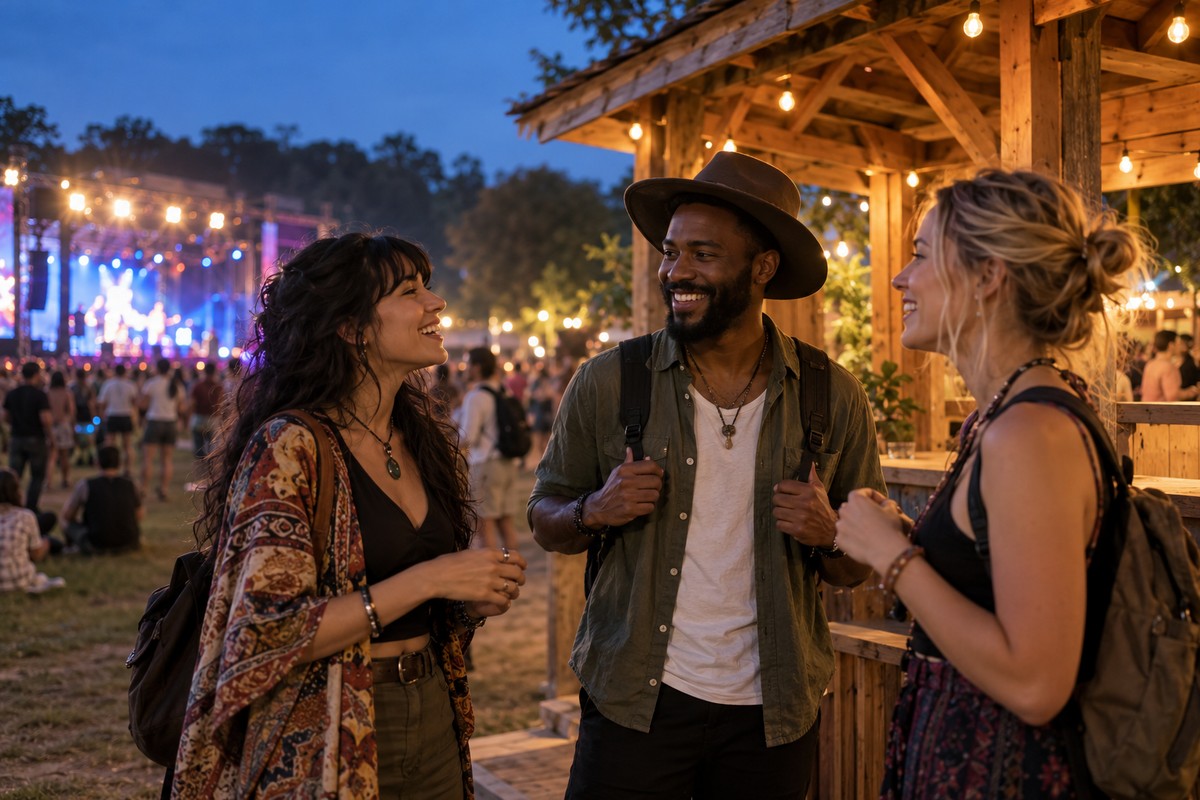

Plan the arrival and the departure
An event plan should cover both ends of the evening. Review the venue's official information about entry, permitted items, accessibility, and transport. Arrange a realistic way home, including what you will do if the event runs late or a service is canceled.
If you attend with others, discuss expectations before arrival. People may want to watch different performances or leave at different times. A clear agreement reduces pressure to stay in a situation that no longer suits someone.
Choose meeting points that remain usable
Pick a recognizable meeting place outside the densest flow of people. Avoid locations that may be blocked, closed, or difficult to approach. Agree on an alternative if the first location becomes unavailable.
Phone signals can be unreliable in crowded venues. Save tickets and essential details before entering, and make sure people know the plan without needing to retrieve it from a group chat. Consider the needs of companions who have limited mobility, sensory sensitivities, or other access requirements.
Notice staff and assistance locations
When you arrive, identify venue staff, information points, and available assistance facilities. Familiarize yourself with exits without obstructing them or assuming every visible door is open to visitors. Follow official instructions if conditions change.
Keep belongings arranged so you can move comfortably. If you become separated from your group, use the agreed meeting plan and seek staff assistance rather than pushing through a dense crowd. Avoid entering a restricted area in an attempt to take a shortcut.
Respect comfort and boundaries
A busy event does not remove anyone's right to personal space or consent. If someone repeatedly approaches, touches, or harasses you, move toward support where possible and report the behavior to venue staff. You are allowed to leave an event early without explaining your decision to everyone in the group.
If crowd conditions feel unsafe, prioritize an available less crowded area and follow staff or emergency instructions. Do not stay to retrieve a better view or keep a schedule.
After the event, confirm that companions have completed their planned journeys. Use the experience to improve the next outing: which meeting point worked, what transport detail was missing, and what assistance was useful? Practical preparation leaves more room to enjoy the event.