
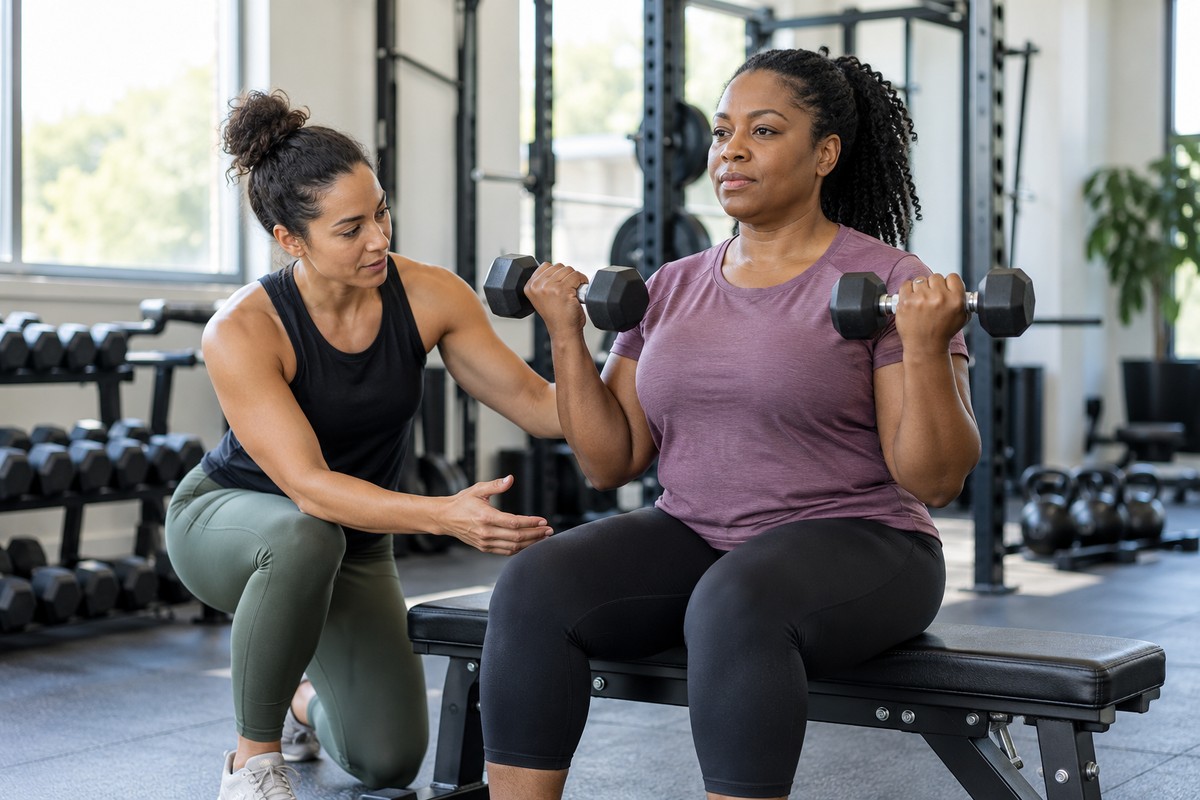

Connect strength to ordinary tasks
Strength training can support the capacity needed for activities such as carrying groceries, rising from a chair, or moving equipment in a class. It does not have to begin with heavy weights or an intimidating gym routine. Start by identifying what you would like everyday movement to feel more manageable.
The aim is a progressive learning process. A beginner needs to understand an exercise, control the movement, and recognize when the chosen resistance is appropriate. Comparing the weight you use with another person's tells you little about whether your own session is useful.
Learn a small set of movements
A qualified coach can help you choose suitable pushing, pulling, lifting, and lower-body exercises. Options may use body weight, machines, bands, or free weights. The best tool is one you can use appropriately with the space and instruction available.
A chair-rise variation or wall-supported push may be suitable starting options for some people, while others need different exercises. Ask for a demonstration and feedback. Do not assume that a movement is automatically appropriate simply because it uses no external weight.
Choose control before load
Resistance should allow you to perform the agreed task without rushing or using a movement you do not understand. Begin with the level your instructor recommends and ask what a completed repetition should look and feel like.
Keep the surrounding area clear and return equipment securely. If you are unsure how to adjust a machine, ask rather than copy a nearby person. A short period of instruction can make the session more useful than repeatedly guessing at settings or positions.
Progress one element at a time
Once an exercise is familiar, progress might involve a modest increase in resistance, additional controlled repetitions, or a different variation. You do not need to change everything at once. Record what you did so that the next decision has a clear starting point.
Do not use pain, exhaustion, or inability to complete a movement as the required measure of success. Stop an exercise that causes concerning symptoms and seek appropriate advice. Training should be adjusted to the person rather than defended because it appears on a printed program.
Leave room for recovery and skill practice
Plan strength sessions alongside the other demands of your week. A demanding physical job or a new self-defense class can affect how much additional work is manageable. Tell your coach about the overall schedule so the sessions do not compete blindly.
Review whether you can maintain good practice and ordinary responsibilities afterward. If the program repeatedly leaves you unable to attend the next planned session, discuss a smaller starting dose. Consistency and learning matter more than a single impressive workout.
Strength is one part of readiness. It can complement endurance, balance, and training experience, but it cannot guarantee a particular outcome in a confrontation. Build it as a useful capacity rather than a promise of invulnerability.
Put the idea into practice
Before your next coached session, identify one everyday activity you want to support. Ask the instructor which exercise relates to it and what a good starting version looks like. Repeat the explanation back before practicing. Afterward, record the equipment setup and one cue that helped you move with control. This gives you useful information for the next lesson without reducing progress to the amount lifted. If the task remains unclear, make clarification the next goal rather than adding resistance or trying a more difficult variation.
Further reading
American Heart Association: Strength and resistance training