
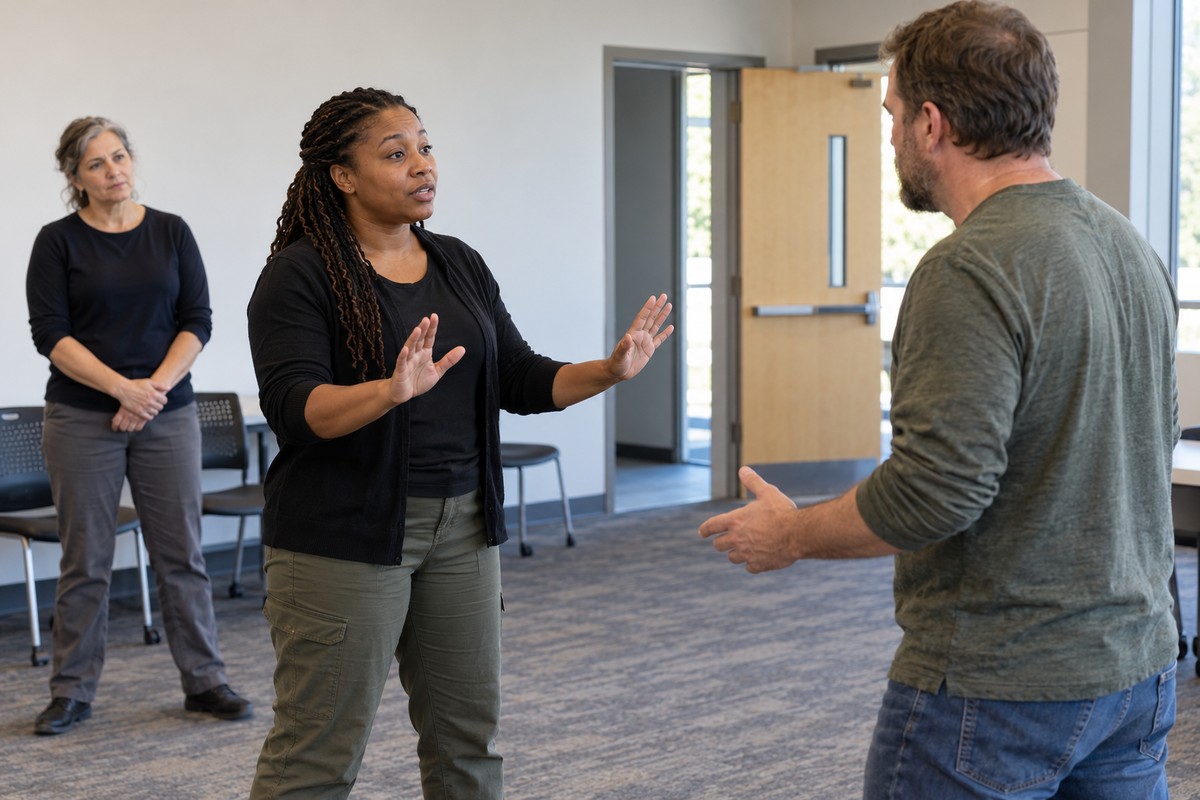

The purpose is to reduce pressure
Verbal de-escalation aims to lower the intensity of an interaction when doing so is feasible. It is not a contest in confidence, and it does not require persuading someone that you are right. Sometimes the most useful result is simply ending the exchange and reaching a place where support is available.
A person who is making threats may not respond to reasonable words. You are not responsible for finding a perfect phrase that changes their behavior. Communication is one option among others, and leaving may deserve priority over continuing a discussion.
Use language you can actually remember
Short statements are easier to practice than speeches. Try “I do not want an argument,” “Please give me room,” or “I am going to leave.” Choose words that sound natural to you. Rehearsing language that feels artificial may make it harder to use when you are tired or distracted.
Where appropriate, acknowledge a practical issue without accepting abuse: “I understand there is a problem with the order. Let us ask the staff.” The intention is to direct attention toward a solution, not to promise cooperation with demands that make you uncomfortable.
Keep the environment in view
Communication can absorb attention. While speaking, remain aware of whether you still have an unobstructed route away and whether help is nearby. Avoid letting a disagreement draw you into an isolated location merely to continue the conversation.
Do not move closer to demonstrate confidence or touch another person to make them listen. Respectful distance gives everyone more room to make choices. The exact space available depends on the setting, mobility needs, and other people; there is no universal measurement that guarantees safety.
Recognize when the conversation is ending
Repeated threats, attempts to block movement, unwanted physical contact, or escalating demands are reasons to reassess whether continued discussion is useful. You can stop explaining yourself. Where possible, move toward staff, a trusted companion, or another suitable source of assistance.
If someone is controlling or violent in an ongoing relationship, a brief communication technique may be insufficient and direct confrontation may increase risk. Individualized planning with a support professional can be more appropriate. For immediate danger, contact local emergency services when it is safe to do so.
Practice a short role-play
With a consenting partner, choose a mild everyday disagreement rather than recreating a traumatic event. Agree that there will be no shouting, physical contact, or blocked exits. Practice one calm statement, one boundary, and one decision to end the exchange.
Pause after each attempt. Ask whether the words were understandable and whether you remembered your route away. Change one element at a time instead of making the partner more aggressive. The exercise should improve clarity, not test how much intimidation someone can tolerate.
De-escalation is useful when it supports your ability to act. It should never become an obligation to remain in a threatening interaction or a reason to blame someone when another person chooses violence.
A practical reflection exercise
Picture a disagreement over a place in a queue. Your practice partner repeats a complaint, but does not shout or approach. You respond once, suggest asking staff if appropriate, and decide whether to leave the exchange. Repeat with different ordinary wording while keeping the same agreed limits. Ask your observer whether the intended end of the conversation was clear. If the role-play feels unhelpful, reduce its complexity. A successful practice attempt can be quiet and uneventful; it does not need a convincing performance of anger.