

Understand the whole journey
Public transportation planning should include the walk to the stop, the ride, transfers, and the last part of the trip. Check the operator's current schedule and any service changes. Knowing the last available departure can help you avoid being stranded by an assumption about usual service.
If you need accessible transportation, confirm the arrangements that matter to you. These may include functioning lifts, station access, boarding assistance, or a suitable alternative when equipment is unavailable. An accessible route can be more useful than the fastest route.
Wait where assistance is available
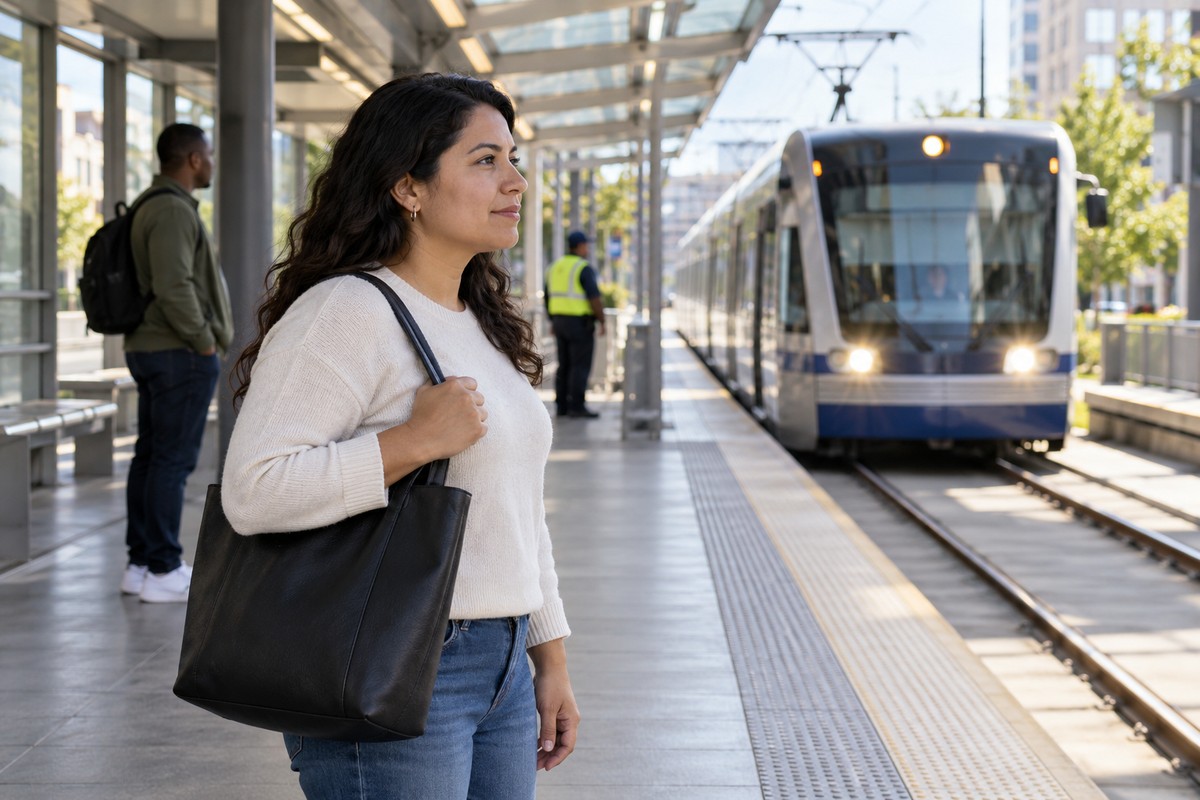
At unfamiliar stops or stations, notice staffed areas, information points, and the operator's assistance systems. A busy, visible waiting area may offer more practical support than an isolated corner. Keep bags arranged so they do not block your movement or other passengers.
Avoid letting an unexpected delay force a rushed decision. If a connection is missed, check the next departure from a suitable place. A backup plan might involve contacting a trusted person or arranging another recognized transport service.
Make communication part of the plan
Keep enough battery to access tickets, directions, and important contacts. Save essential details so they remain available if the connection is unreliable. Paper notes can be useful when a phone is the only place you have stored the destination.
Transport operators have different reporting methods. Look up the official contact or assistance process before an unfamiliar trip. Do not assume an emergency number used in another country or city applies locally.
Handle unwanted interactions calmly
You do not have to continue a conversation or provide personal information to another passenger. If an interaction becomes uncomfortable, changing seats or moving toward staff may be appropriate where movement is safe. Avoid taking risks near tracks, roadways, or closing doors in order to get away quickly.
If someone makes threats or interferes with your ability to leave, seek assistance and contact local emergency services for immediate danger. The most useful response depends on the environment and the options available.
Try planning one ordinary trip with an alternative route and a backup contact. This exercise is about reducing uncertainty, not expecting trouble. Good preparation helps you use public transportation with greater confidence.