
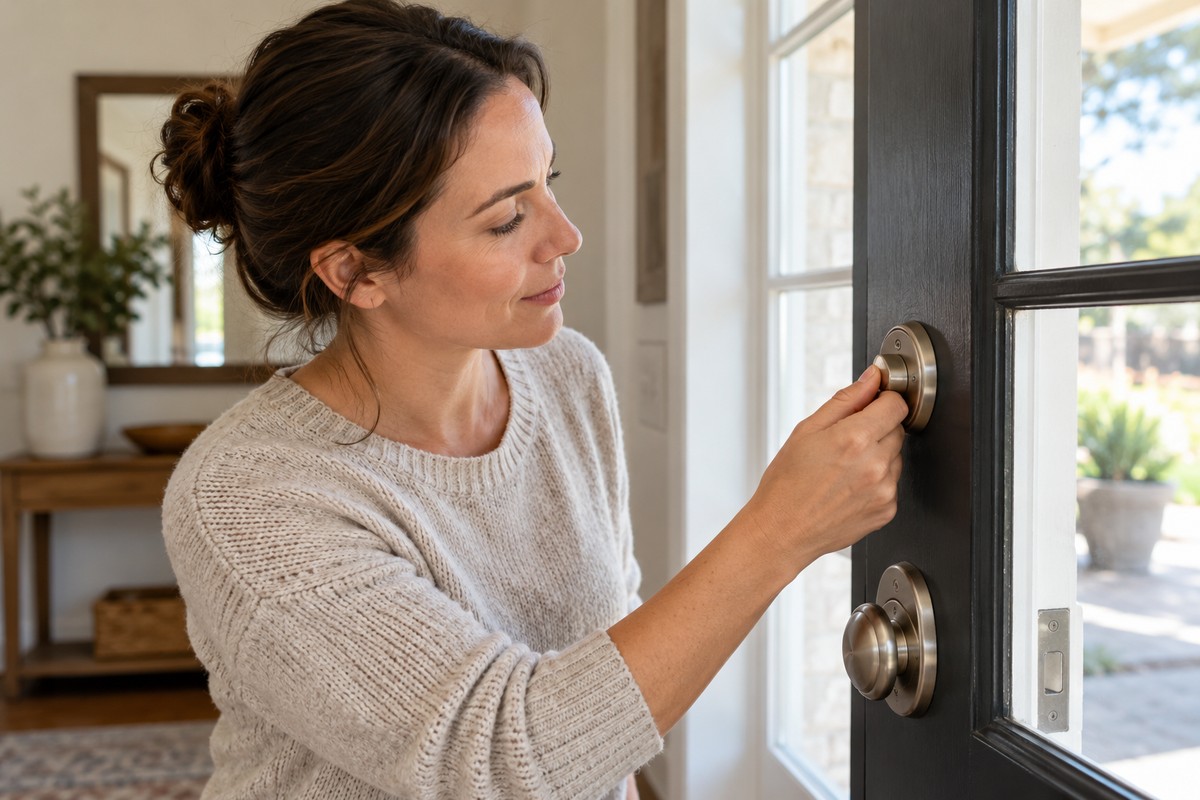

Start with how your home is used
A home safety check works best when it reflects everyday life. Think about who enters the home, where deliveries arrive, how people leave at different times, and whether anyone needs accessible entry or assistance. The goal is a manageable routine that household members can actually follow.
Walk through the home during daylight and again after dark. Note entrances that are difficult to see, damaged hardware, and areas where you struggle to locate keys or a phone. Separate simple maintenance from work that requires a qualified professional or permission from a landlord.
Check entrances without blocking escape
Inspect door and window locks for damage or unreliable operation. Make sure the people who need to use them understand how they work. A lock that is difficult to operate can create problems for children, older adults, or people with limited hand strength.
Security improvements must preserve safe emergency escape. Do not improvise barriers that trap occupants or interfere with required exits. Ask a qualified installer or your property manager about appropriate repairs. In a shared building, report access-control problems instead of modifying common doors yourself.
Create a visitor and delivery routine
Decide how you will respond to unexpected visitors. You can speak through a closed door or another available communication system before deciding whether to open it. Verify an unexpected service visit through a contact method you already trust, rather than relying only on information supplied by the visitor.
For deliveries, consider where parcels can be left without obstructing movement or revealing more about the household than necessary. Avoid giving access codes to people who do not need them. If a code is shared for a specific purpose, review access afterward using the system's official settings.
Make household communication simple
Agree on where essential contacts are kept and how to reach one another if a phone is unavailable. Discuss what to do when a key is lost or someone arrives home unexpectedly. A brief conversation prevents different household members from making conflicting assumptions.
Finish your review with three achievable actions: repair one problem, improve one routine, and clarify one communication detail. Revisit the plan when someone moves in, equipment changes, or a household member's needs change. A useful home safety plan is maintained over time rather than completed once and forgotten.